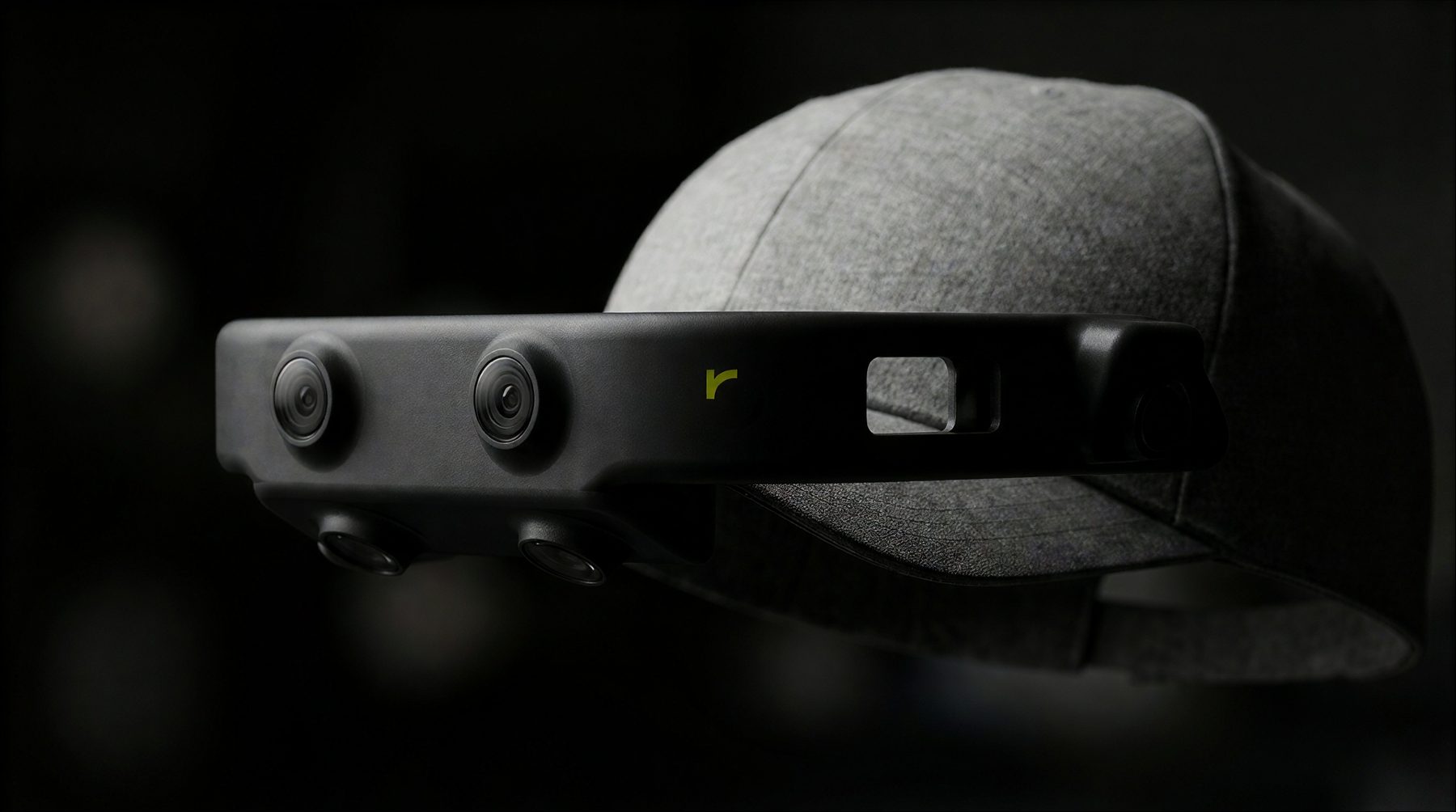
Two cameras at eye level, approximately 60 mm apart and calibrated to each other. They preserve scene context and support stereo depth processing in your pipeline.
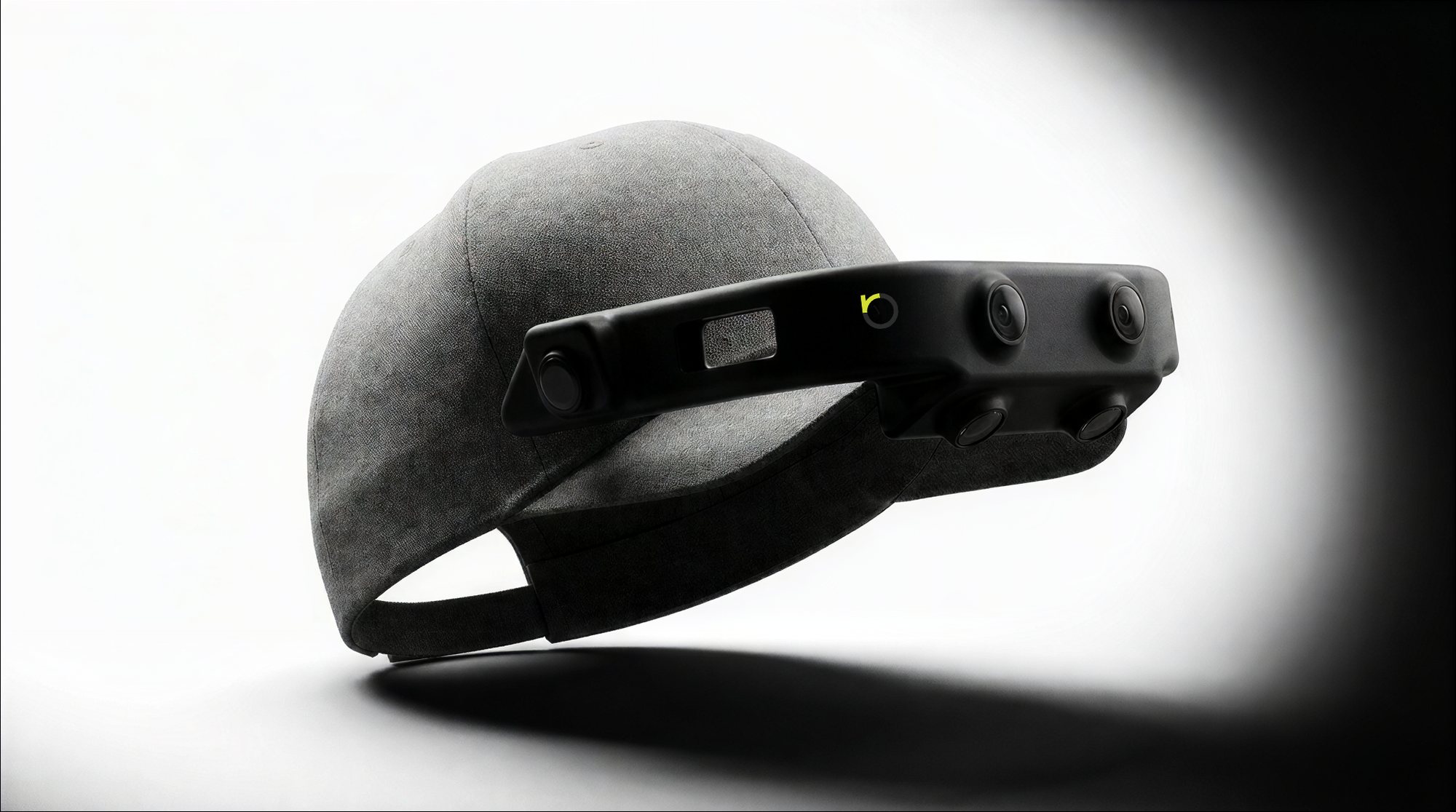
Six-camera cap
Six global-shutter cameras on one cap. Two face forward, two face down at your hands, one sits on each side. All 1920 × 1200, all on one hardware trigger, one USB-C cable to the receiver.
View Six-camera samples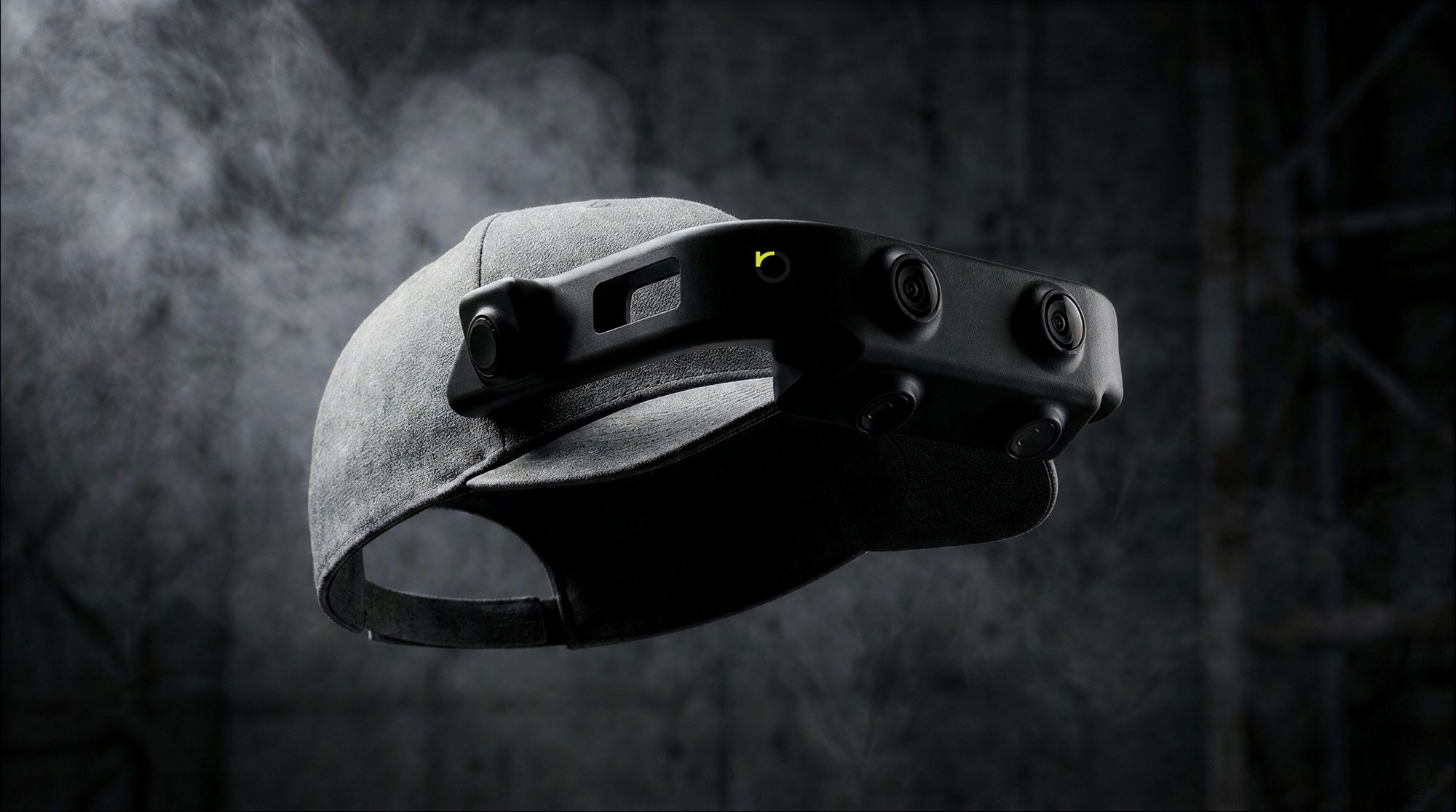
Live capture · real session
Hardware-synced 30 fps
Coverage
Robot policies fail on what the head view never saw. The Six-camera cap keeps the scene, hands, and periphery in the same episode from six cameras that all fire together.
Two cameras at eye level, approximately 60 mm apart and calibrated to each other. They preserve scene context and support stereo depth processing in your pipeline.
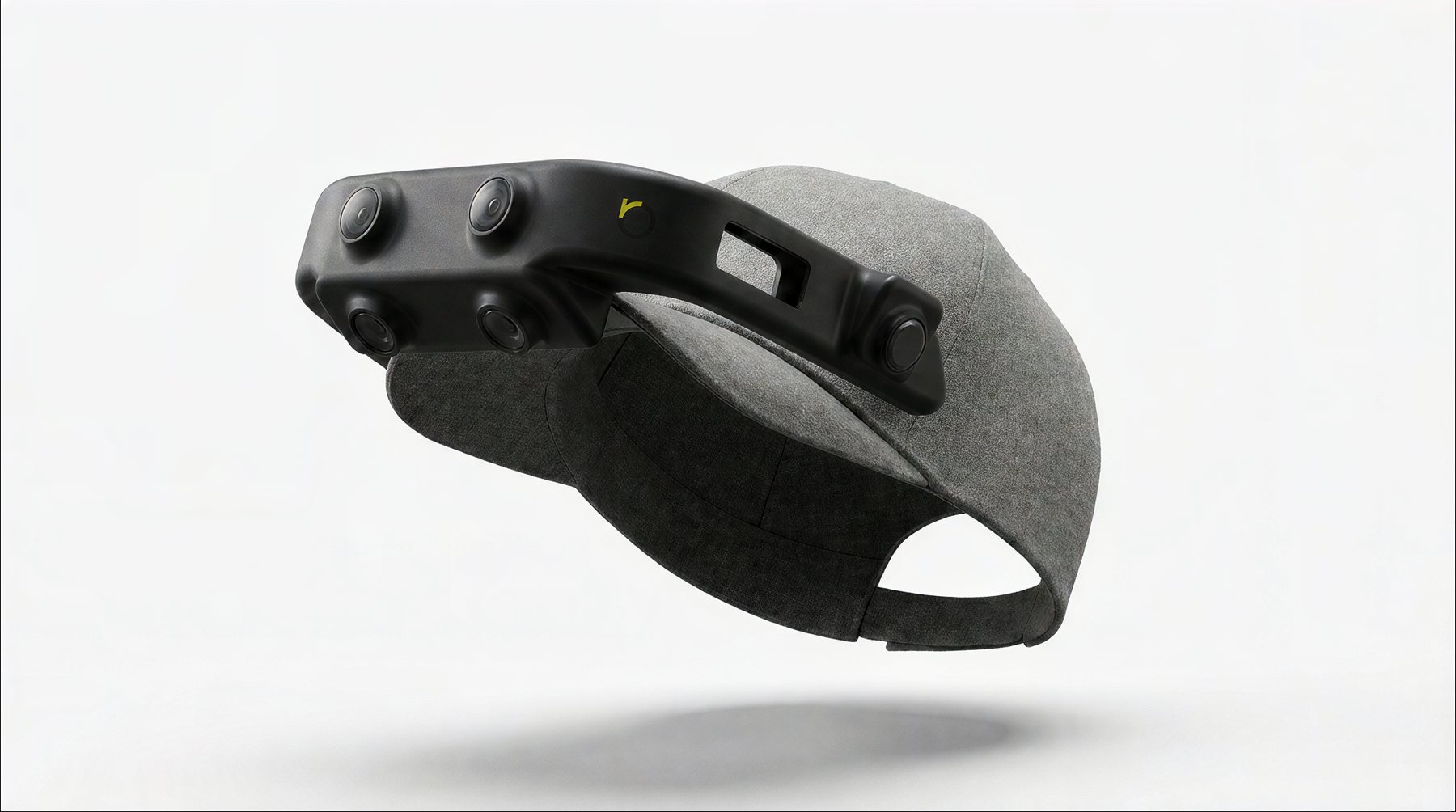
Two more cameras aimed at the table. Hand-object contact stays in frame when the head looks up, the shot a forward-only cap loses.
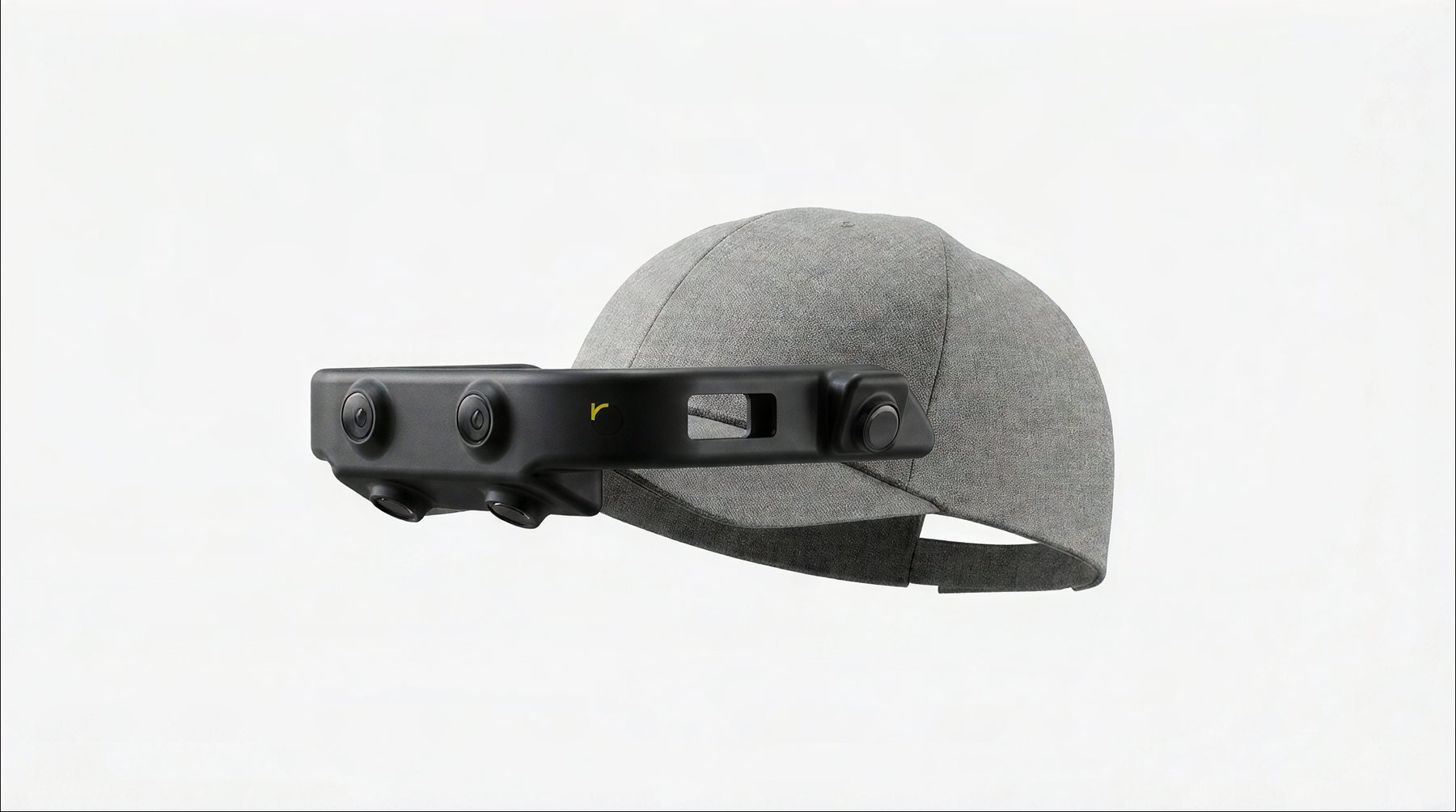
One wide camera on each end of the bar. Optional 60 fps on these two for fast hand motion and handovers at the edge of view.
Synchronization
Every camera is global shutter and 1920 × 1200. All six expose on the same hardware trigger pulse and every frame carries a hardware timestamp, so frame N on one camera is frame N on all six. Nothing is aligned in software afterwards.
One camera generates the trigger pulse and the other five expose on it. Per-frame hardware timestamps in microseconds on every stream.
Optional free-running mode for the two side cameras. Use per-frame device timestamps for post-capture alignment; this mode is not hardware-synchronized with the 30 fps streams.
Synchronized output
Two forward, two downward, two side
Every camera 1920 × 1200, global shutter
≈505 Hz, on the same clock as every frame.
Intrinsics for every camera and extrinsics between them. Depth from the forward or downward cameras in your pipeline, not a black box.
One cable. One receiver.
All six cameras leave the cap on one USB-C cable. The receiver records locally and is controlled from a phone over Bluetooth and 2.4 GHz Wi-Fi. Bring your own compatible removable SD storage and USB power bank. No laptop in the capture loop, no onboard battery on the head.
Specification
Forward and downward cameras share the approved Stereo-cap sensor spec. Lenses are M12 pinhole and can be swapped for a different field of view on request.
| Spec | Forward and downward cameras | Side cameras · left and right |
|---|---|---|
| Cameras | Color global-shutter cameras, 1/2.6", 1928 × 1208 active, 3 µm pixels | Global shutter |
| Resolution | 1920 × 1200 each · forward and downward streams also available as 3840 × 1200 side-by-side | 1920 × 1200 |
| Frame rate | 30 fps hardware-synchronized | 30 fps hardware-synchronized · up to 60 fps free-running |
| Shutter | Global · shared hardware trigger | Global |
| Field of view | ≈112° H · 80° V (±3°) · 119° D each | ≈112° H · 80° V (±3°) · 119° D |
| Lens | M12 pinhole · customizable field of view on request | |
| Camera spacing | ≈60 mm between the two forward cameras and between the two downward cameras | — |
| Motion | 2 × 6-axis IMU ≈505 Hz, ±1000 dps, ±4 g · ≈0.4 ms video-to-IMU alignment | — |
| Cross-camera sync | One shared hardware trigger across all six sensors · per-frame hardware timestamps in device microseconds · frame ID as the join key across streams | |
| Calibration | Intrinsics per camera + extrinsics between cameras · pinhole + Brown-Conrady | Pinhole + Brown-Conrady intrinsics |
| Interface | One USB-C cable from the cap to the OpenRobot receiver | |
| Recording | Local to the receiver · bring your own compatible removable SD storage and USB power bank · phone control over Bluetooth and 2.4 GHz Wi-Fi · receiver also accepts Mono camera modules | |
Six-camera sample program
Need only the head view? Start with Stereo-cap. Need the wrists too? See the Full Rig.